

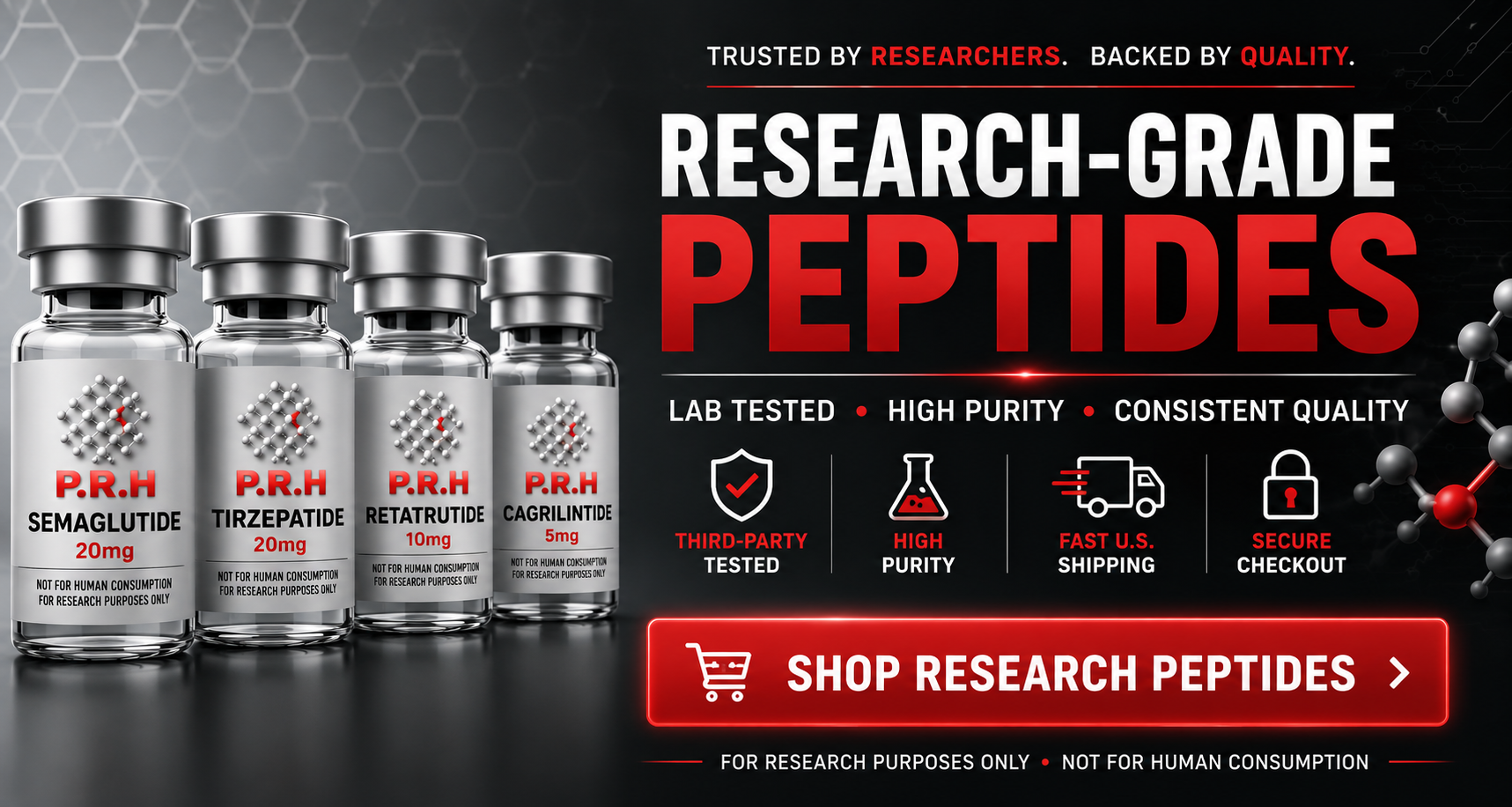
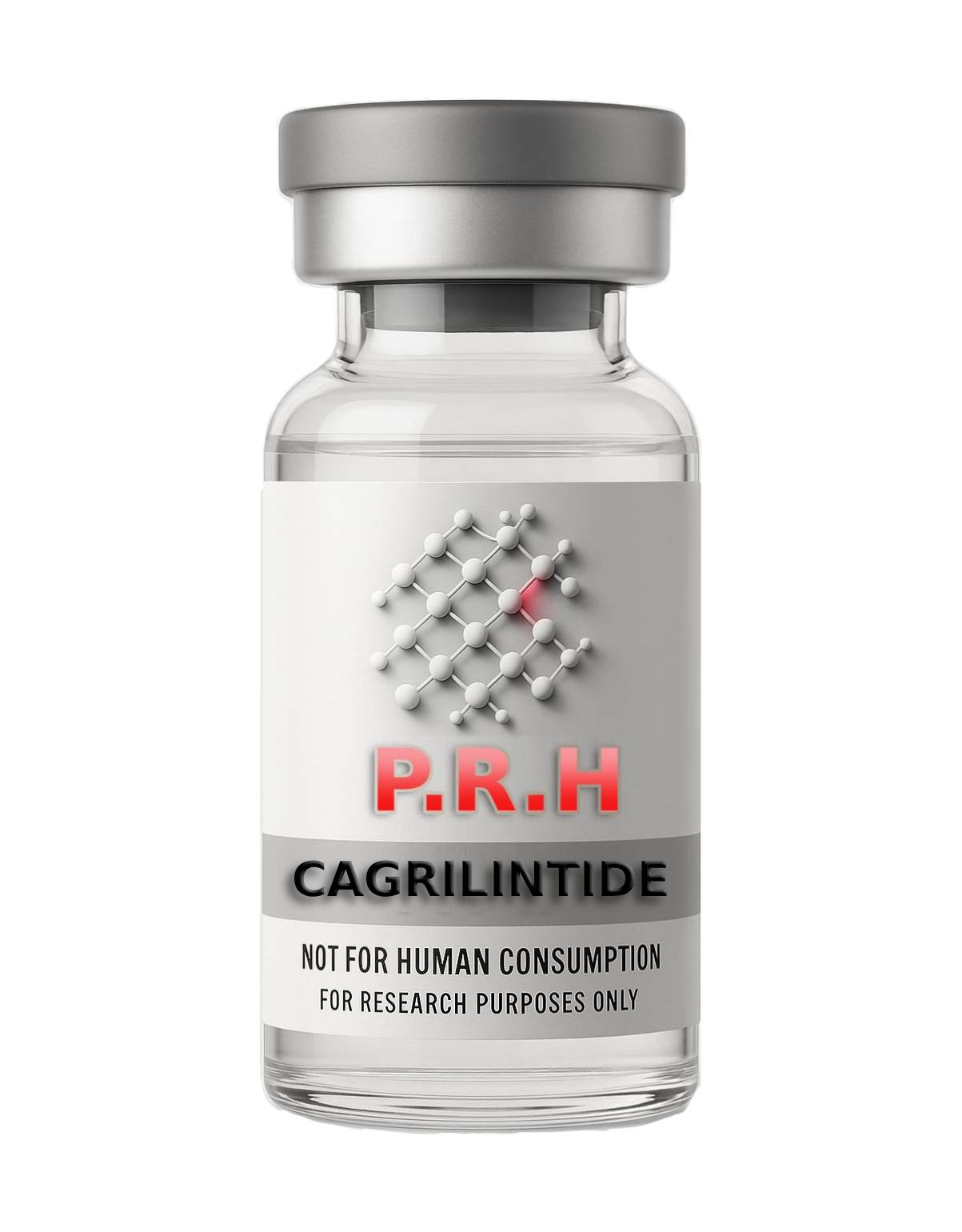
Cagrilintide 10mg Peptide
$99.99 $59.99
✓ Save 40% — Discount Automatically Applied. No Coupon Needed.
Cagrilintide 10mg Peptide
Cagrilintide 10mg is a lyophilized research compound supplied for laboratory investigations involving amylin-receptor signaling, satiety pathways, gastric motility, nutrient-response mechanisms, and metabolic communication. As a long-acting amylin analogue, Cagrilintide provides a distinct research model compared with GLP-1-focused and multi-receptor metabolic compounds.
The 10mg presentation provides a larger quantity for repeated analytical testing, extended receptor-signaling studies, and comparative research involving GLP-1S, Tirzepatide, and GLP-3R. Intended strictly for laboratory research and analytical applications.
Cagrilintide 10mg Peptide
Lyophilized Amylin Analogue for Metabolic, Satiety, and Receptor-Signaling Research
What Is Cagrilintide 10mg?
Cagrilintide 10mg is a synthetic, long-acting amylin analogue supplied for controlled laboratory research. It is studied in experimental models involving amylin-receptor signaling, appetite-related pathways, satiety signaling, gastric motility, nutrient-response mechanisms, energy regulation, and metabolic communication.
Amylin is a peptide hormone associated with pancreatic beta-cell activity and is commonly investigated alongside insulin-related and nutrient-response pathways. Research involving amylin analogues may examine communication between peripheral metabolic systems and central signaling regions involved in food-intake regulation and energy balance.
Cagrilintide differs from GLP-1-focused research compounds because it is primarily studied through amylin-related receptor systems rather than GLP-1 receptor activity. This distinction makes it useful for comparative laboratory studies involving Cagrilintide, GLP-1S, Tirzepatide, and GLP-3R.
The 10mg Cagrilintide peptide presentation provides a larger lyophilized quantity for extended analytical testing, repeated receptor-signaling experiments, comparative metabolic studies, and multi-phase laboratory protocols.
Cagrilintide Research Overview
Cagrilintide is studied in metabolic peptide research as a model for examining prolonged amylin-receptor signaling. Amylin-related pathways are commonly investigated in connection with satiety, food-intake behavior, gastric emptying, nutrient processing, pancreatic communication, endocrine feedback, and broader energy-regulation systems.
Laboratory investigations may evaluate how Cagrilintide interacts with amylin-receptor subtypes and how those pathways influence neural communication associated with appetite-related signaling. Researchers may also study downstream relationships involving gastric motility, meal-response patterns, nutrient handling, and metabolic adaptation.
Cagrilintide is frequently included in comparative studies with GLP-1S because the compounds act through different primary receptor systems. GLP-1S is studied through GLP-1 receptor activity, while Cagrilintide is studied as a long-acting amylin analogue.
Researchers may also compare Cagrilintide with Tirzepatide, which is studied through GIP and GLP-1 receptor pathways, and GLP-3R, which is investigated in relation to GIP, GLP-1, and glucagon receptor systems.
The 10mg presentation may be useful for laboratories requiring greater compound availability across repeated experiments, multiple study groups, or longer-duration research protocols.
This product is supplied strictly for laboratory and analytical research. It is not intended for human use, veterinary use, medical use, diagnostic use, or therapeutic application.
Mechanism of Action
Cagrilintide is studied as an amylin analogue with activity involving calcitonin-family receptor complexes associated with amylin signaling. Laboratory research may examine how receptor engagement influences neural and gastrointestinal pathways related to satiety, food-intake behavior, gastric motility, and nutrient-response signaling.
Amylin receptors are formed through interactions between calcitonin receptors and receptor-activity-modifying proteins. Researchers investigate these receptor combinations to better understand differences among amylin-receptor subtypes and their roles in central and peripheral metabolic communication.
Cagrilintide’s prolonged activity makes it relevant for controlled studies examining sustained receptor engagement, peptide pharmacology, signaling duration, endocrine feedback, and metabolic adaptation.
Because its primary research pathway differs from GLP-1, GIP, and glucagon receptor compounds, Cagrilintide provides a distinct experimental model within broader metabolic peptide research.
Cagrilintide Research Applications
- Amylin-receptor signaling studies
- Satiety and appetite-related pathway research
- Food-intake behavior and meal-response models
- Gastric motility and nutrient-processing studies
- Metabolic signaling and energy-balance research
- Pancreatic and endocrine communication models
- Long-acting peptide pharmacology investigations
- Cagrilintide and GLP-1S comparison research
- Amylin, GLP-1, GIP, and glucagon pathway comparisons
Why Choose Peptide Research Hub?
- Lyophilized compounds supplied for laboratory research
- Quality-focused sourcing and handling standards
- Clear product labeling and research-focused information
- Reliable domestic shipping within the United States
- Responsive support for research supply orders
Product Specifications
- Product Name: Cagrilintide 10mg Peptide
- Compound: Cagrilintide
- Quantity: 10mg per vial
- Form: Lyophilized powder
- Appearance: White to off-white powder
- Category: Long-acting amylin analogue
- Research Focus: Amylin-receptor signaling, satiety pathways, gastric motility, food-intake models, and metabolic research
- Status: Investigational research compound
- Use: Laboratory research only
Storage and Handling
Store Cagrilintide 10mg in a cool, dry, and dark environment. Refrigerated or frozen conditions are recommended for long-term storage according to appropriate laboratory procedures.
Protect the lyophilized material from excessive heat, direct light, and moisture. Avoid repeated freeze-thaw cycles. Proper laboratory storage and handling help maintain compound integrity and consistency for controlled research applications.
Frequently Asked Questions
What is Cagrilintide 10mg?
Cagrilintide 10mg is a lyophilized investigational research compound supplied for laboratory studies involving amylin-receptor signaling, satiety pathways, gastric motility, food-intake models, and metabolic communication.
What type of compound is Cagrilintide?
Cagrilintide is studied as a synthetic, long-acting amylin analogue.
What receptors are studied with Cagrilintide?
Research involving Cagrilintide focuses primarily on amylin-receptor systems within the calcitonin-family receptor group.
What research areas involve Cagrilintide?
Common research areas include amylin signaling, satiety pathways, food-intake behavior, gastric motility, nutrient-response models, endocrine communication, peptide pharmacology, and energy regulation.
What is the difference between Cagrilintide 5mg and 10mg?
The research compound is the same. The difference is the quantity supplied per vial. The 10mg presentation contains twice the amount provided in the 5mg format.
How does Cagrilintide differ from GLP-1S?
Cagrilintide is primarily studied through amylin-related receptor pathways. GLP-1S is primarily studied through GLP-1 receptor signaling.
Why are Cagrilintide and GLP-1S compared?
Researchers compare them because they involve different receptor systems, allowing investigation of amylin signaling alongside GLP-1 receptor activity.
How does Cagrilintide differ from Tirzepatide?
Cagrilintide is studied as an amylin analogue. Tirzepatide is studied for combined GIP and GLP-1 receptor pathway activity.
Is Cagrilintide supplied as a lyophilized powder?
Yes. This Cagrilintide 10mg product is supplied in lyophilized form for laboratory research applications.
How should Cagrilintide 10mg be stored?
Store the material in a cool, dry, dark environment. Refrigerated or frozen storage is recommended for maintaining research integrity.
Is Cagrilintide 10mg intended for human use?
No. This product is intended strictly for laboratory research use only and is not for human or veterinary use.
Related Metabolic Research Peptides
Researchers studying Cagrilintide may also be interested in related metabolic and incretin research peptides involving amylin, GLP-1, GIP, glucagon, and associated receptor-signaling pathways.
Be the first to review “Cagrilintide 10mg Peptide”
Related products

Peptides
✓ Save 40% — Discount Automatically Applied. No Coupon Needed.

Peptides
✓ Save 40% — Discount Automatically Applied. No Coupon Needed.

Deals of the Week
✓ Save 40% — Discount Automatically Applied. No Coupon Needed.

Peptides
✓ Save 40% — Discount Automatically Applied. No Coupon Needed.
✓ Save 40% — Discount Automatically Applied. No Coupon Needed.
Peptides
✓ Save 40% — Discount Automatically Applied. No Coupon Needed.
Deals of the Week
✓ Save 40% — Discount Automatically Applied. No Coupon Needed.
Reviews
There are no reviews yet.