
Retatrutide 20mg Peptide | GLP-1 GIP Glucagon Research Peptide | Peptide Research Hub
Retatrutide 20mg Peptide
High-Purity Lyophilized Research Peptide for GLP-1, GIP, and Glucagon Receptor Studies
What is Retatrutide?
Retatrutide 20mg is a synthetic research peptide studied for its relationship with three major metabolic receptor pathways: GLP-1, GIP, and glucagon receptor signaling.
Unlike single-pathway GLP-1 research peptides such as Semaglutide, or dual-pathway compounds such as Tirzepatide, Retatrutide is commonly discussed in research as a multi-receptor peptide model involving GLP-1, GIP, and glucagon receptor systems.
The Retatrutide 20mg peptide format provides researchers with a larger lyophilized peptide quantity for extended studies, comparative metabolic models, and laboratory research involving multi-receptor pathway analysis.
Reference: Wikipedia – Retatrutide
Research Overview
Retatrutide has become an important compound in metabolic peptide research because it allows investigators to study three receptor pathways within one experimental model. Research involving Retatrutide often focuses on incretin signaling, glucagon receptor activity, glucose homeostasis, endocrine pathway response, energy balance models, and metabolic adaptation.
Retatrutide is frequently compared with Semaglutide and Tirzepatide because each compound represents a different receptor profile. Semaglutide is commonly studied through GLP-1 receptor signaling, Tirzepatide is studied through GIP and GLP-1 receptor pathways, and Retatrutide is studied in relation to GLP-1, GIP, and glucagon receptor systems.
The 20mg presentation may be useful for laboratories requiring a larger peptide quantity for repeated testing, long-duration studies, comparative analysis, or multi-phase research models.
This product is supplied strictly as a research peptide for laboratory and analytical use. It is not intended for human use, veterinary use, medical use, diagnostic use, or therapeutic application.
Mechanism of Action
Retatrutide is studied for its relationship with GLP-1, GIP, and glucagon receptor pathways. This multi-receptor profile gives researchers a model for examining how multiple endocrine and metabolic signaling systems may interact within controlled laboratory settings.
GLP-1 receptor signaling is commonly associated with glucose-dependent insulin response, glucagon regulation, appetite signaling, gastric emptying models, and metabolic feedback pathways. GIP receptor activity is studied in relation to insulin response, adipose signaling, lipid metabolism, and broader energy-regulation pathways.
Glucagon receptor pathway research is often associated with hepatic glucose output, energy expenditure models, lipid metabolism, and metabolic adaptation. Together, these receptor systems make Retatrutide relevant in comparative incretin and multi-receptor peptide research.
Retatrutide Research Applications
- GLP-1, GIP, and glucagon receptor pathway studies
- Metabolic signaling and endocrine pathway research
- Glucose homeostasis and insulin response models
- Comparative incretin peptide research
- Energy balance and metabolic adaptation studies
- Glucagon receptor signaling investigations
- Multi-receptor peptide research models
- Semaglutide, Tirzepatide, and Retatrutide comparison studies
Why Choose Peptide Research Hub?
- High-purity lyophilized research peptides
- Quality-focused sourcing and handling standards
- Reliable domestic shipping within the USA
- Research-focused product descriptions and transparent labeling
- Trusted support for research supply orders
Product Specifications
- Product Name: Retatrutide 20mg Peptide
- Compound: Retatrutide
- Quantity: 20mg per vial
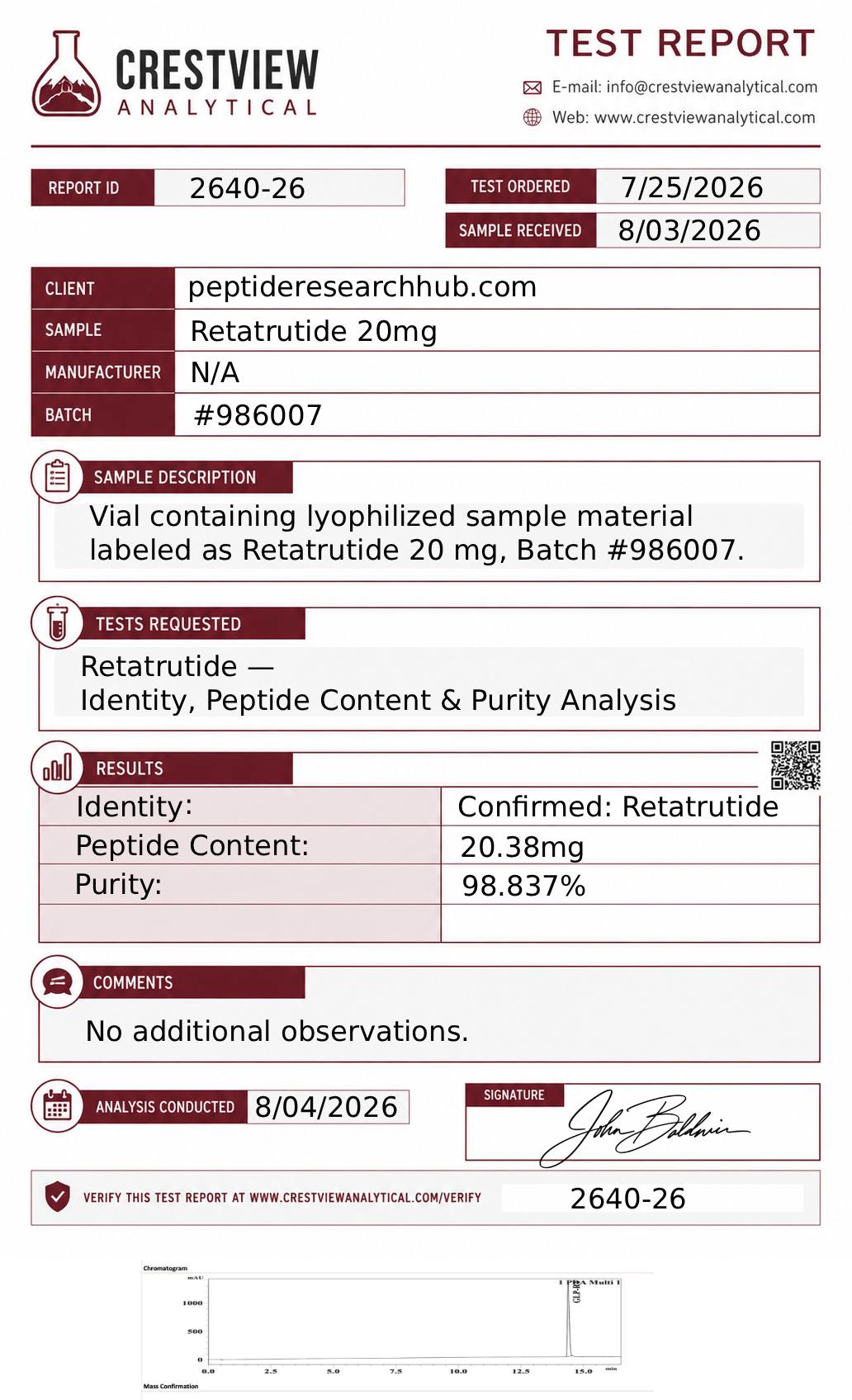
- Form: Lyophilized powder
- Appearance: White to off-white powder
- Category: Multi-receptor research peptide
- Research Focus: GLP-1, GIP, glucagon receptor signaling, metabolic research, and endocrine pathway studies
- Use: Laboratory research only
Storage and Handling
Retatrutide 20mg should be stored in a cool, dry, and dark environment. For long-term storage, refrigerated or frozen conditions are recommended according to standard laboratory handling practices.
Avoid excessive heat, moisture, direct light, and repeated freeze-thaw cycles. Proper storage and handling help maintain peptide integrity and consistency for controlled research applications.
Frequently Asked Questions
What is Retatrutide 20mg?
Retatrutide 20mg is a lyophilized research peptide supplied in a 20mg vial for laboratory studies involving GLP-1, GIP, and glucagon receptor pathway research.
What receptors are studied with Retatrutide?
Retatrutide is commonly studied in relation to GLP-1, GIP, and glucagon receptor pathways, making it relevant for multi-receptor metabolic peptide research.
What is the difference between Retatrutide and Semaglutide?
Semaglutide is primarily studied as a GLP-1 receptor pathway compound, while Retatrutide is studied in relation to GLP-1, GIP, and glucagon receptor pathways.
What is the difference between Retatrutide and Tirzepatide?
Tirzepatide is studied for dual GIP and GLP-1 receptor activity. Retatrutide is commonly discussed in research as a multi-receptor peptide involving GIP, GLP-1, and glucagon receptor systems.
Is Retatrutide supplied as a lyophilized powder?
Yes. This Retatrutide 20mg research peptide is supplied as a lyophilized powder for laboratory research applications.
What research areas utilize Retatrutide?
Retatrutide is commonly studied in metabolic signaling research, endocrine pathway studies, glucose homeostasis models, glucagon receptor research, and comparative incretin peptide studies.
How should Retatrutide 20mg be stored?
Retatrutide should be stored in a cool, dry, dark environment. Refrigerated or frozen storage is recommended for maintaining peptide integrity before research use.
Is Retatrutide 20mg intended for human use?
No. This product is intended strictly for laboratory research use only. It is not for human use, veterinary use, medical use, diagnostic use, or therapeutic application.
Related Research Peptides
Researchers studying Retatrutide may also be interested in other metabolic and incretin-related research peptides used in laboratory studies involving GLP-1, GIP, glucagon, and related receptor signaling pathways.


Reviews
There are no reviews yet.