




NAD+ 500mg Peptide

$46.99 $28.19
✓ Save 40% — Discount Automatically Applied. No Coupon Needed.
• 500 mg lyophilized powder
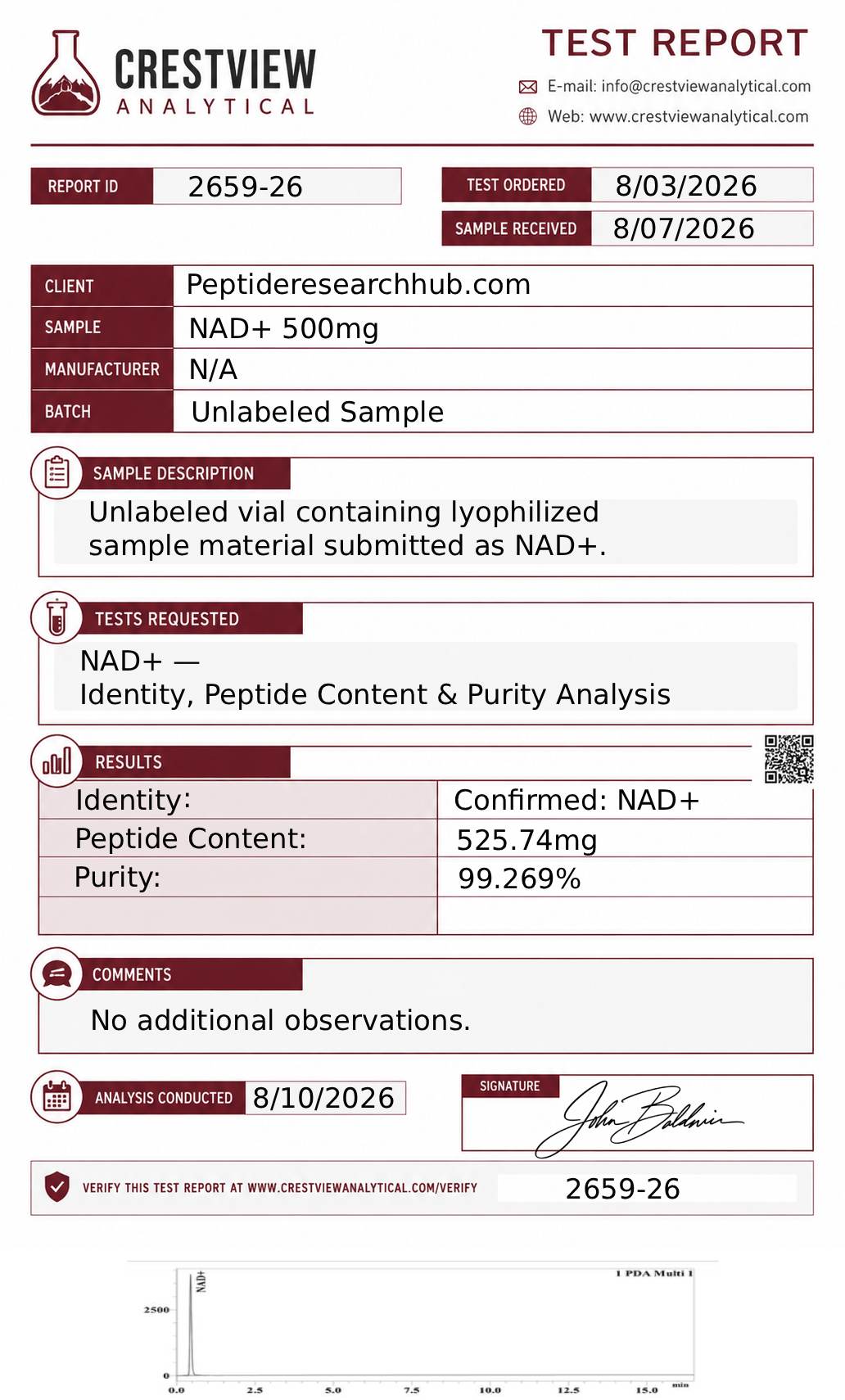
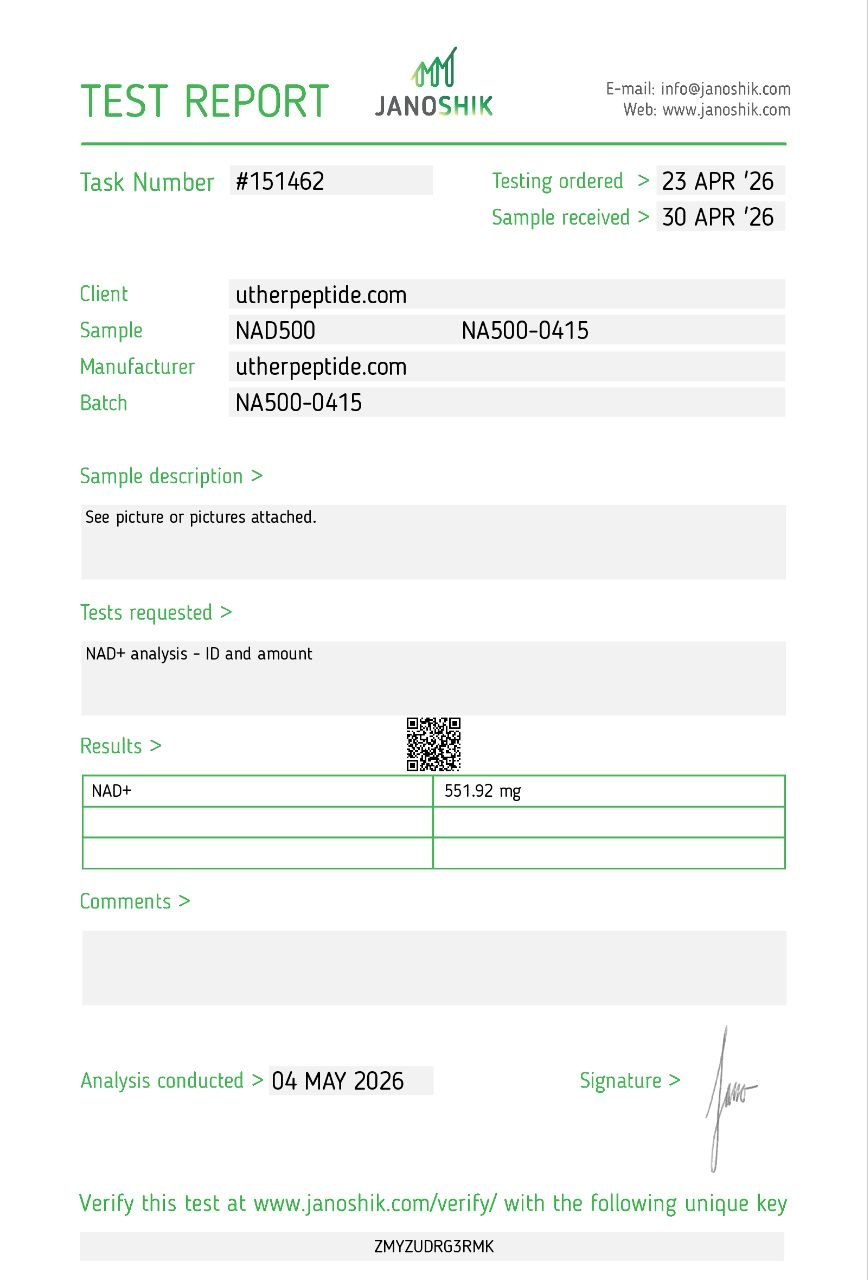
• ≥99% purity | PRH manufactured | U.S. sourced
NAD+ 500mg Nicotinamide Adenine Dinucleotide | High-Purity Research Compound | Peptide Research Hub
NAD+ 500mg (Nicotinamide Adenine Dinucleotide)
High-Purity Lyophilized Research Compound for Cellular Energy, Mitochondrial Function, DNA Repair, and Metabolic Research
What is NAD+?
NAD+ (Nicotinamide Adenine Dinucleotide) is an essential coenzyme naturally present in virtually every living cell. It plays a fundamental role in cellular metabolism, mitochondrial energy production, ATP synthesis, redox reactions, DNA repair pathways, oxidative stress regulation, and numerous enzymatic processes responsible for maintaining cellular homeostasis.
NAD+ has become one of the most extensively researched cellular molecules because it participates in hundreds of metabolic reactions throughout the body. Laboratory studies commonly investigate NAD+ for its relationship with mitochondrial bioenergetics, sirtuin activation, PARP enzyme activity, genomic stability, oxidative phosphorylation, and healthy aging research.
NAD+ 500mg provides researchers with a high-purity lyophilized research compound suitable for laboratory investigations involving mitochondrial biology, cellular metabolism, metabolic regulation, oxidative stress response, and energy production pathways.
Research Overview
NAD+ has become a cornerstone of modern cellular biology because of its involvement in energy metabolism, mitochondrial performance, cellular maintenance, and metabolic regulation. Researchers commonly investigate NAD+ in laboratory models involving ATP production, oxidative phosphorylation, glucose metabolism, fatty acid metabolism, and mitochondrial quality control.
Research also focuses heavily on NAD+ because it functions as a required cofactor for sirtuins and poly(ADP-ribose) polymerase (PARP) enzymes. These enzyme systems are widely studied for their relationship with DNA repair, genomic stability, cellular resilience, protein regulation, oxidative stress response, and longevity-associated biological pathways.
Additional areas of investigation include neurobiology, muscle physiology, cardiovascular biology, inflammatory signaling, metabolic adaptation, and cellular stress-response mechanisms. Because NAD+ participates in numerous biological systems simultaneously, it remains one of the most versatile compounds available for laboratory research.
The 500mg presentation is well suited for laboratories requiring a concentrated quantity of NAD+ for repeated experiments, formulation development, analytical testing, and controlled research protocols.
This product is supplied strictly for laboratory and analytical research. It is not intended for human use, veterinary use, medical use, diagnostic use, or therapeutic application.
Mechanism of Action
NAD+ functions as a critical electron carrier during cellular metabolism. Through oxidation-reduction (redox) reactions, NAD+ accepts and donates electrons that allow mitochondria to generate ATP through oxidative phosphorylation. This process makes NAD+ fundamental to cellular energy production.
Beyond energy metabolism, NAD+ serves as a required substrate for several important enzyme families including sirtuins and PARP enzymes. These proteins are frequently studied for their relationship with DNA repair, mitochondrial quality control, cellular maintenance, stress-response signaling, and genomic stability.
Researchers also investigate NAD+ because of its relationship with oxidative stress regulation, inflammatory signaling, metabolic adaptation, mitochondrial efficiency, and overall cellular homeostasis. These interconnected biological pathways have made NAD+ one of the most widely researched molecules in modern metabolic and longevity research.
NAD+ Research Applications
- Mitochondrial function and ATP production studies
- Cellular metabolism and bioenergetics research
- DNA repair and genomic stability investigations
- Sirtuin activation and longevity pathway research
- PARP enzyme and cellular maintenance studies
- Oxidative stress and redox biology models
- Neurobiology and cellular resilience research
- Healthy aging and metabolic regulation studies
Why Choose Peptide Research Hub?
- High-purity lyophilized research compounds
- Quality-focused sourcing and handling standards
- Reliable domestic shipping throughout the United States
- Transparent product labeling and research-focused documentation
- Trusted supplier of laboratory research materials
Product Specifications
- Product Name: NAD+ 500mg
- Full Name: Nicotinamide Adenine Dinucleotide
- Quantity: 500mg per vial
- Form: Lyophilized powder
- Appearance: White to off-white powder
- Category: Cellular metabolism research compound
- Research Focus: Mitochondrial function, ATP production, cellular metabolism, DNA repair, oxidative stress, and longevity pathway research
- Use: Laboratory research only
Storage and Handling
Store NAD+ 500mg in a cool, dry, dark environment away from moisture and direct light. Refrigerated or frozen storage is recommended for long-term laboratory storage.
Avoid repeated freeze-thaw cycles and exposure to excessive heat or humidity. Following proper laboratory storage procedures helps preserve compound stability and consistency for research applications.
Frequently Asked Questions
What is NAD+ 500mg?
NAD+ 500mg is a high-purity lyophilized nicotinamide adenine dinucleotide research compound supplied for laboratory studies involving cellular metabolism, mitochondrial biology, ATP production, and DNA repair.
What is NAD+ used for in laboratory research?
NAD+ is commonly investigated in studies involving mitochondrial function, oxidative phosphorylation, cellular metabolism, oxidative stress, DNA repair pathways, sirtuin activation, and metabolic regulation.
What makes NAD+ important?
NAD+ functions as an essential coenzyme involved in hundreds of metabolic reactions and serves as a critical electron carrier required for ATP production and numerous cellular maintenance pathways.
Is NAD+ supplied as a lyophilized powder?
Yes. NAD+ 500mg is supplied as a lyophilized research compound intended for laboratory applications.
How does NAD+ differ from the 1000mg version?
The compounds are identical. The difference is the total quantity supplied per vial, allowing researchers to select the amount appropriate for their laboratory protocols.
Why is NAD+ studied in mitochondrial research?
NAD+ participates directly in redox reactions and oxidative phosphorylation, making it fundamental to ATP production and mitochondrial energy metabolism.
How should NAD+ 500mg be stored?
Store the lyophilized compound in a cool, dry, dark location. Refrigerated or frozen storage is recommended for maintaining laboratory stability.
Is this product intended for human use?
No. NAD+ 500mg is intended strictly for laboratory research use only. It is not intended for human use, veterinary use, diagnostic use, or therapeutic application.
Related Research Products
Researchers studying NAD+ may also be interested in additional research compounds related to mitochondrial biology, metabolism, cellular signaling, and energy regulation.
Be the first to review “NAD+ 500mg Peptide”
Related products

Peptides
✓ Save 40% — Discount Automatically Applied. No Coupon Needed.
✓ Save 40% — Discount Automatically Applied. No Coupon Needed.

✓ Save 40% — Discount Automatically Applied. No Coupon Needed.
✓ Save 40% — Discount Automatically Applied. No Coupon Needed.

Deals of the Week
✓ Save 40% — Discount Automatically Applied. No Coupon Needed.

Deals of the Week
✓ Save 40% — Discount Automatically Applied. No Coupon Needed.
Peptides
✓ Save 40% — Discount Automatically Applied. No Coupon Needed.
Reviews
There are no reviews yet.