




MOTS-C 40mg Peptide | Mitochondrial Research Peptide | Peptide Research Hub
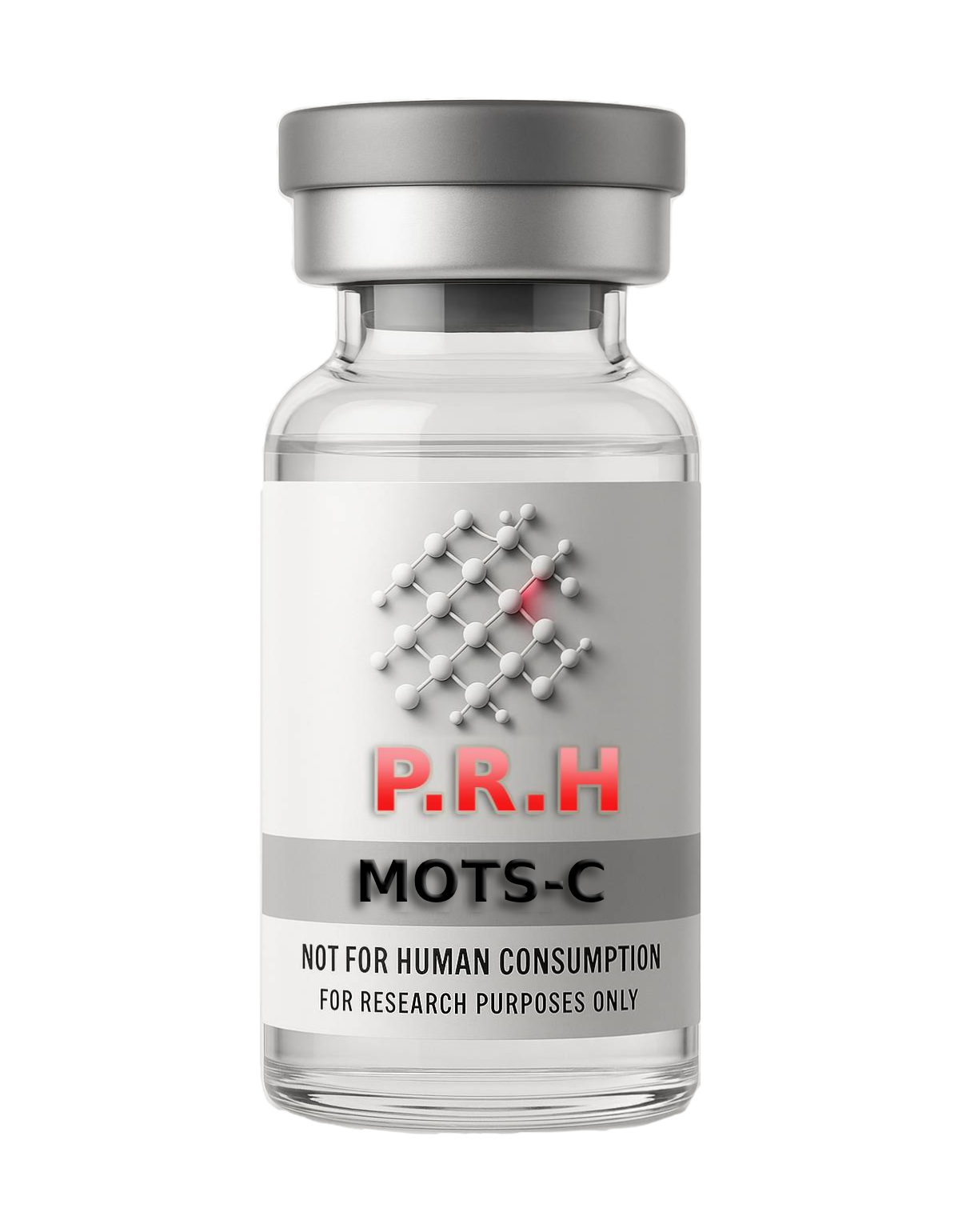
MOTS-C 40mg Peptide
Mitochondrial Research Peptide for Energy Metabolism, Exercise Physiology & Healthy Aging Studies
What is MOTS-C 40mg?
MOTS-C 40mg is a synthetic version of a naturally occurring mitochondrial-derived peptide that has become an important subject of metabolic and cellular research. Unlike many research peptides that originate from nuclear DNA, MOTS-C is encoded within mitochondrial DNA, making it one of the few known mitochondrial signaling peptides investigated for its role in cellular communication, metabolic regulation, exercise physiology, and healthy aging.
Researchers commonly investigate MOTS-C because of its relationship with energy metabolism, mitochondrial function, glucose utilization, insulin sensitivity, cellular stress adaptation, and metabolic flexibility. Experimental studies continue to explore how mitochondrial signaling peptides influence whole-body metabolism and communication between cells under normal and stressed physiological conditions.
The 40mg presentation provides researchers with a larger quantity for extended laboratory investigations, long-term metabolic studies, comparative peptide research, and multi-phase experimental protocols.
Learn more about mitochondrial-derived peptides by visiting:
Wikipedia – MOTS-C
Research Overview
MOTS-C has attracted significant scientific interest because it represents a unique signaling molecule produced by the mitochondria. Research has examined how this peptide may participate in communication between mitochondria and the nucleus while influencing pathways involved in metabolism, exercise physiology, cellular adaptation, and healthy aging.
Laboratory investigations frequently examine MOTS-C in models involving glucose metabolism, insulin sensitivity, lipid utilization, skeletal muscle physiology, exercise performance, energy expenditure, mitochondrial efficiency, oxidative stress, and metabolic health.
Researchers also study MOTS-C in experimental models evaluating metabolic flexibility, cellular resilience, mitochondrial signaling, and age-related biological changes. Because mitochondrial function influences nearly every cell in the body, MOTS-C has become one of the most recognized peptides in mitochondrial research.
The 40mg format is particularly useful for laboratories conducting long-duration metabolic investigations, comparative mitochondrial peptide studies, and extended research involving exercise physiology and healthy aging.
Mechanism of Action & Research Pathways
MOTS-C is investigated because it functions as a mitochondrial signaling peptide capable of influencing multiple metabolic pathways. Experimental studies suggest that MOTS-C participates in communication between mitochondria and the nucleus while contributing to cellular adaptation during metabolic stress.
- Mitochondrial signaling research
- Energy metabolism investigations
- Glucose utilization studies
- Insulin sensitivity research
- Skeletal muscle physiology models
- Exercise performance investigations
- Cellular stress adaptation
- Healthy aging and longevity research
- Metabolic flexibility studies
- Oxidative stress research
Because these pathways influence whole-body metabolic health, MOTS-C continues to be investigated in laboratory studies involving endurance physiology, mitochondrial function, metabolic regulation, and age-related biological processes.
MOTS-C 40mg Research Applications
- Mitochondrial signaling research
- Energy metabolism studies
- Glucose metabolism investigations
- Insulin sensitivity research
- Skeletal muscle physiology models
- Exercise performance and endurance research
- Healthy aging and longevity investigations
- Metabolic flexibility studies
- Cellular stress adaptation research
- Comparative metabolic peptide investigations
MOTS-C vs. NAD+
MOTS-C and NAD+ are frequently studied together because both are associated with mitochondrial biology and cellular metabolism. MOTS-C is investigated as a mitochondrial-derived signaling peptide involved in metabolic communication and cellular adaptation, while NAD+ is an essential coenzyme studied for its role in cellular energy production, redox reactions, DNA repair, and mitochondrial function.
Researchers often compare these compounds in laboratory models involving energy metabolism, glucose regulation, exercise physiology, healthy aging, and mitochondrial health to better understand how different mitochondrial pathways contribute to metabolic function.
MOTS-C vs. AOD-9604
Although both peptides are commonly investigated in metabolic research, they represent different areas of study. MOTS-C is primarily researched for mitochondrial signaling, glucose metabolism, cellular adaptation, and exercise physiology, while AOD-9604 is frequently investigated in laboratory models involving lipid metabolism, fat utilization, and body composition.
Researchers may compare these compounds to evaluate different mechanisms influencing metabolic regulation, energy utilization, and overall metabolic physiology.
Why Choose Peptide Research Hub?
- Research-focused peptide products
- Clearly labeled compounds with transparent specifications
- Third-party testing available for applicable products
- Fast order processing and dependable fulfillment
- Responsive customer support
- Detailed product information designed for laboratory researchers
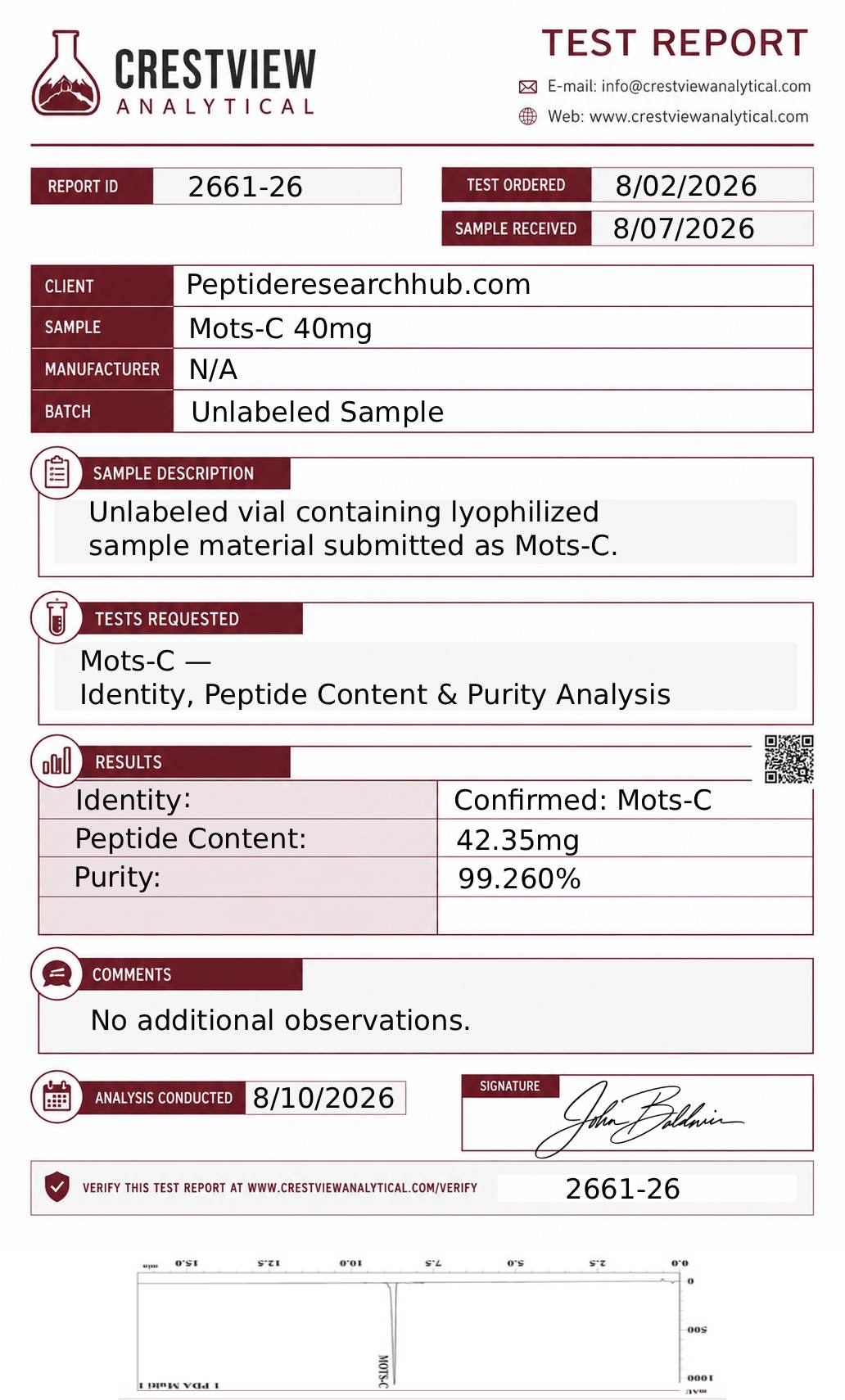
Researchers can review available analytical reports on our
Third-Party Testing
page.
Product Specifications
- Product: MOTS-C 40mg Peptide
- Compound: MOTS-C
- Quantity: 40mg per vial
- Form: Lyophilized powder
- Appearance: White to off-white powder
- Category: Mitochondrial research peptide
- Research Focus: Mitochondrial signaling, metabolism, exercise physiology, glucose regulation, and healthy aging research
- Use: Laboratory research only
Storage & Handling
Store MOTS-C 40mg according to standard laboratory procedures for lyophilized peptides. Protect the material from excessive heat, moisture, and direct light. Proper storage helps maintain peptide integrity and consistency for controlled laboratory investigations.
Frequently Asked Questions
What is MOTS-C 40mg?
MOTS-C 40mg is a mitochondrial-derived research peptide investigated in laboratory studies involving metabolism, exercise physiology, glucose regulation, and healthy aging.
What is MOTS-C commonly studied for?
Researchers investigate MOTS-C in laboratory models involving mitochondrial signaling, insulin sensitivity, glucose metabolism, skeletal muscle physiology, endurance, cellular stress adaptation, and metabolic regulation.
How is MOTS-C different from NAD+?
MOTS-C is a mitochondrial signaling peptide, while NAD+ is an essential metabolic coenzyme. Both are frequently researched for mitochondrial biology but participate in different cellular processes.
Is MOTS-C supplied as a lyophilized powder?
Yes. MOTS-C 40mg is supplied as a lyophilized research peptide.
Is MOTS-C intended for human use?
No. MOTS-C 40mg is intended strictly for laboratory research and analytical applications. It is not intended for human or veterinary use.
Related Metabolic Research Peptides
Research Use Only: MOTS-C 40mg is intended strictly for laboratory research and analytical applications. Not for human or veterinary use.
Be the first to review “MOTS-C 40mg Peptide”
Related products

Peptides
✓ Save 40% — Discount Automatically Applied. No Coupon Needed.

Peptides
✓ Save 40% — Discount Automatically Applied. No Coupon Needed.

Peptides
✓ Save 40% — Discount Automatically Applied. No Coupon Needed.
Deals of the Week
✓ Save 40% — Discount Automatically Applied. No Coupon Needed.



Peptides
✓ Save 40% — Discount Automatically Applied. No Coupon Needed.

Peptides
✓ Save 40% — Discount Automatically Applied. No Coupon Needed.
Peptides
✓ Save 40% — Discount Automatically Applied. No Coupon Needed.
Reviews
There are no reviews yet.