


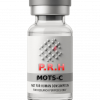
Sermorelin 10mg Peptide

$53.99 $32.39
✓ Save 40% — Discount Automatically Applied. No Coupon Needed.
Sermorelin 10mg Research Peptide
Lyophilized Sermorelin 10mg peptide for laboratory research involving endocrine signaling, muscle biology, recovery, protein metabolism, body composition, and metabolic pathways.
Research Use Only. Not for human or veterinary use.
Sermorelin 10mg Peptide | Muscle, Recovery & Endocrine Research | Peptide Research Hub
Sermorelin 10mg Peptide
Lyophilized Sermorelin Research Peptide for Muscle, Recovery, Body Composition & Endocrine Signaling Studies
What is Sermorelin 10mg?
Sermorelin 10mg is a synthetic research peptide consisting of the first 29 amino acids of growth hormone-releasing hormone (GHRH). This sequence represents the biologically active portion of GHRH and has made Sermorelin an important compound for laboratory research involving endocrine signaling, muscle biology, recovery, body composition, protein metabolism, and growth-related pathways.
Unlike compounds that act directly on downstream growth pathways, Sermorelin is studied primarily for its interaction with growth hormone-releasing hormone receptors. This makes the peptide useful for investigating upstream endocrine signaling and the biological processes influenced by this receptor system.
Experimental Sermorelin research may examine skeletal muscle response, protein synthesis pathways, tissue recovery, metabolic activity, lipid metabolism, cellular growth, and endocrine regulation.
The Sermorelin 10mg peptide provides a lyophilized research format suitable for controlled laboratory investigations and comparative peptide studies.
Sermorelin Muscle & Recovery Research
Muscle biology represents an important area of experimental research involving Sermorelin and related endocrine pathways. Growth-related signaling participates in biological processes associated with skeletal muscle development, protein metabolism, tissue adaptation, and cellular growth.
Researchers may investigate Sermorelin in laboratory models involving muscle tissue response, protein synthesis signaling, lean tissue development, cellular adaptation, and metabolic activity.
Recovery research is another area where Sermorelin-related signaling is of interest. Experimental models can examine relationships between endocrine signaling and biological processes associated with tissue repair, protein turnover, muscle recovery, and cellular regeneration.
These research areas make Sermorelin useful for studying how upstream endocrine signaling may influence downstream biological processes associated with muscle tissue and recovery.
Sermorelin Body Composition & Metabolic Research
Sermorelin is also studied in experimental models involving body composition, lipid metabolism, lean tissue, adipose tissue, energy utilization, and metabolic signaling.
Endocrine pathways can influence numerous biological processes associated with nutrient utilization, protein turnover, lipid regulation, tissue development, and energy balance. Sermorelin provides researchers with a model for examining how GHRH receptor signaling interacts with these systems.
Researchers may investigate relationships between Sermorelin signaling and lean tissue development, fat metabolism, metabolic adaptation, and broader body-composition pathways under controlled experimental conditions.
How Sermorelin Works in Research Models
Sermorelin is studied primarily for its ability to interact with growth hormone-releasing hormone receptors. These receptors participate in signaling within the hypothalamic-pituitary endocrine system.
Because Sermorelin corresponds to the biologically active 1-29 amino-acid sequence of GHRH, researchers use the compound to examine receptor activation and downstream endocrine responses.
This signaling pathway is relevant to experimental investigations involving skeletal muscle biology, protein metabolism, cellular growth, recovery, tissue adaptation, body composition, lipid metabolism, and broader metabolic activity.
Sermorelin therefore provides researchers with a useful model for studying the relationship between upstream receptor signaling and downstream growth-related biological processes.
Sermorelin 10mg Research Applications
- Growth hormone-releasing hormone receptor research
- Endocrine signaling studies
- Skeletal muscle and muscle tissue research
- Muscle growth signaling models
- Protein synthesis and protein metabolism research
- Recovery and tissue response studies
- Cellular growth and tissue adaptation research
- Body composition research
- Lean tissue and adipose tissue models
- Lipid and fat metabolism studies
- Energy balance and metabolic pathway research
- Comparative endocrine peptide studies
Sermorelin vs. CJC-1295 in Research
Sermorelin and CJC-1295 are frequently compared because both compounds are investigated in research involving GHRH receptor signaling and related endocrine pathways.
Sermorelin consists of the biologically active 1-29 amino-acid sequence of GHRH and is commonly studied as a relatively short-duration signaling peptide.
CJC-1295 is a modified research peptide designed to alter the duration and characteristics of GHRH-related signaling. Different forms of CJC-1295 can therefore provide researchers with additional models for studying signaling duration.
Comparative research involving Sermorelin and CJC-1295 can examine differences in endocrine signaling, muscle-related pathways, recovery, protein metabolism, body composition, and metabolic activity.
Sermorelin & Ipamorelin Research
Sermorelin and Ipamorelin are also relevant to comparative endocrine peptide research because the compounds interact with different receptor systems.
Sermorelin is studied primarily through GHRH receptor signaling, while Ipamorelin is investigated for its interaction with the ghrelin receptor.
Researchers may compare these pathways in experimental models involving muscle tissue, protein metabolism, recovery, body composition, metabolic activity, and endocrine signaling.
Researchers interested in this area can also explore
Ipamorelin 5mg Peptide.
Why Choose Peptide Research Hub?
- Research-focused peptide products
- Quality-focused sourcing and handling standards
- Clear compound and vial labeling
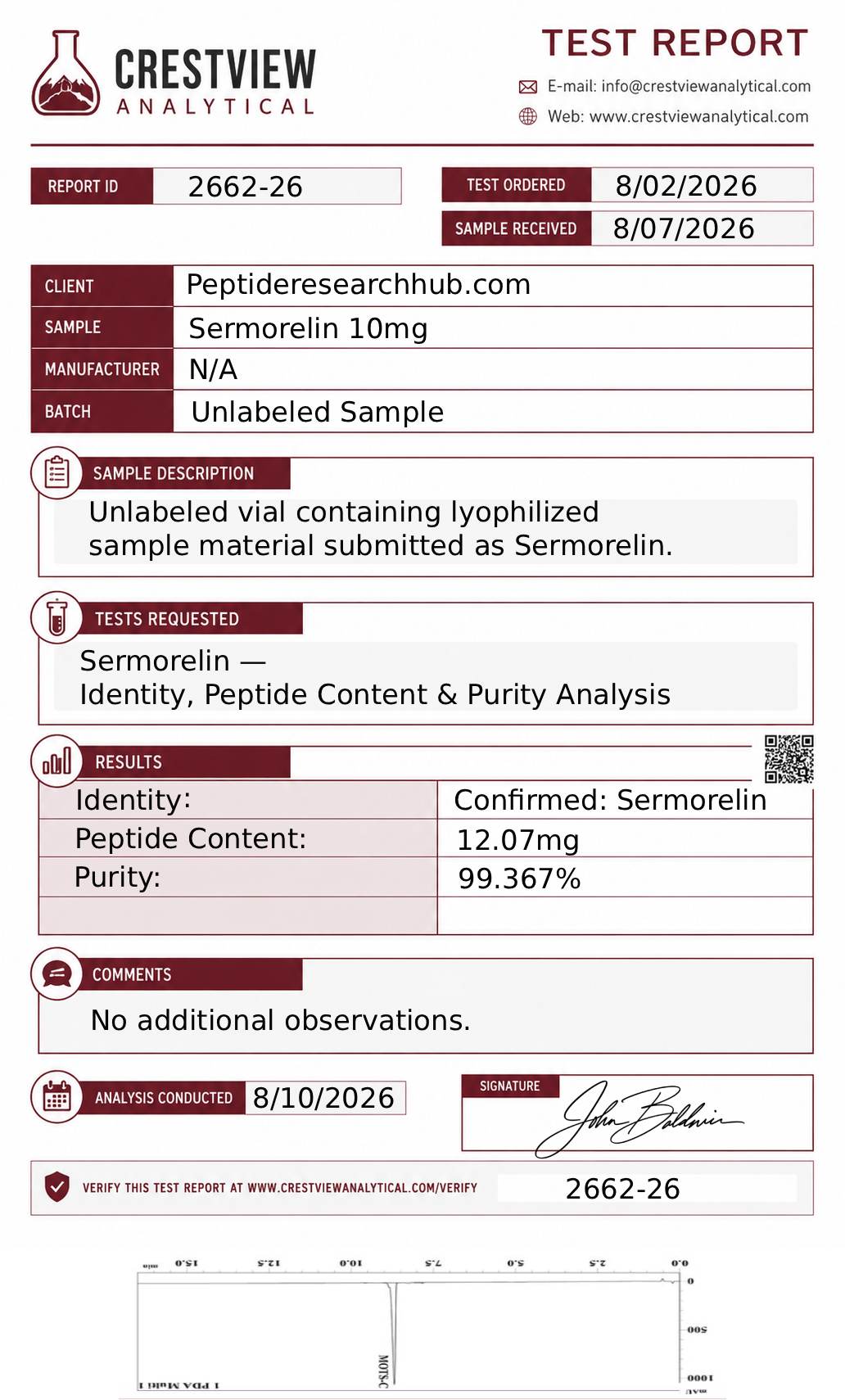
- Third-party testing information available for applicable products
- Fast order processing and reliable fulfillment
- Responsive customer support
Researchers can review available analytical information on our
Third-Party Testing page.
Sermorelin 10mg Product Specifications
- Product: Sermorelin 10mg Peptide
- Compound: Sermorelin
- Peptide Length: 29 amino acids
- Quantity: 10mg per vial
- Form: Lyophilized powder
- Category: Research peptide
- Research Focus: Endocrine signaling, muscle biology, recovery, protein metabolism, body composition and metabolic pathways
- Use: Laboratory research only
Storage & Handling
Sermorelin 10mg should be stored according to appropriate laboratory procedures for lyophilized research peptides. Protect the material from excessive heat, moisture, and direct light.
Proper laboratory storage and handling help maintain peptide integrity and consistency for controlled research applications.
Sermorelin 10mg Frequently Asked Questions
What is Sermorelin 10mg?
Sermorelin 10mg is a 29-amino-acid synthetic research peptide studied for GHRH receptor activity and related endocrine, muscle, recovery, and metabolic pathways.
What is Sermorelin studied for?
Sermorelin research includes endocrine signaling, skeletal muscle biology, protein metabolism, recovery pathways, tissue adaptation, body composition, lipid metabolism, and metabolic signaling.
Is Sermorelin studied for muscle growth?
Sermorelin is investigated in laboratory models involving growth-related endocrine signaling, skeletal muscle response, protein synthesis pathways, lean tissue development, and tissue adaptation.
Is Sermorelin researched for recovery?
Yes. Experimental research may examine Sermorelin-related endocrine signaling in connection with muscle recovery, protein turnover, tissue response, cellular adaptation, and regenerative processes.
Is Sermorelin studied for body composition?
Research may investigate relationships between Sermorelin signaling and lean tissue, adipose tissue, lipid metabolism, energy balance, and broader body-composition pathways.
What is the difference between Sermorelin and CJC-1295?
Both compounds are investigated in relation to GHRH receptor signaling, but their structures and signaling characteristics differ. Sermorelin contains the active 1-29 amino-acid sequence of GHRH, while CJC-1295 is a modified research peptide used to investigate altered signaling duration.
How many amino acids are in Sermorelin?
Sermorelin consists of 29 amino acids corresponding to the biologically active 1-29 sequence of growth hormone-releasing hormone.
Is Sermorelin 10mg supplied as a lyophilized powder?
Yes. This Sermorelin 10mg research peptide is supplied in lyophilized form for laboratory research applications.
Is Sermorelin 10mg intended for human use?
No. Sermorelin 10mg is intended strictly for laboratory research and analytical applications. It is not intended for human or veterinary use.
Related Muscle & Endocrine Research Peptides
Researchers investigating Sermorelin may also be interested in related peptides studied for endocrine signaling, muscle biology, recovery, protein metabolism, and body composition.
Be the first to review “Sermorelin 10mg Peptide”
Related products

Peptides
✓ Save 40% — Discount Automatically Applied. No Coupon Needed.
Peptides
✓ Save 40% — Discount Automatically Applied. No Coupon Needed.

Peptides
✓ Save 40% — Discount Automatically Applied. No Coupon Needed.

Deals of the Week
✓ Save 40% — Discount Automatically Applied. No Coupon Needed.

Peptides
✓ Save 40% — Discount Automatically Applied. No Coupon Needed.

Deals of the Week
✓ Save 40% — Discount Automatically Applied. No Coupon Needed.
✓ Save 40% — Discount Automatically Applied. No Coupon Needed.
Peptides
✓ Save 40% — Discount Automatically Applied. No Coupon Needed.
Reviews
There are no reviews yet.