
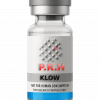
KLOW 80mg Peptide Blend
GHK-Cu 50mg, BPC-157 10mg, TB-500 10mg & KPV 10mg Research Peptide Blend for Skin, Recovery, Connective Tissue & Cellular Signaling Research
What is KLOW Blend 80mg?
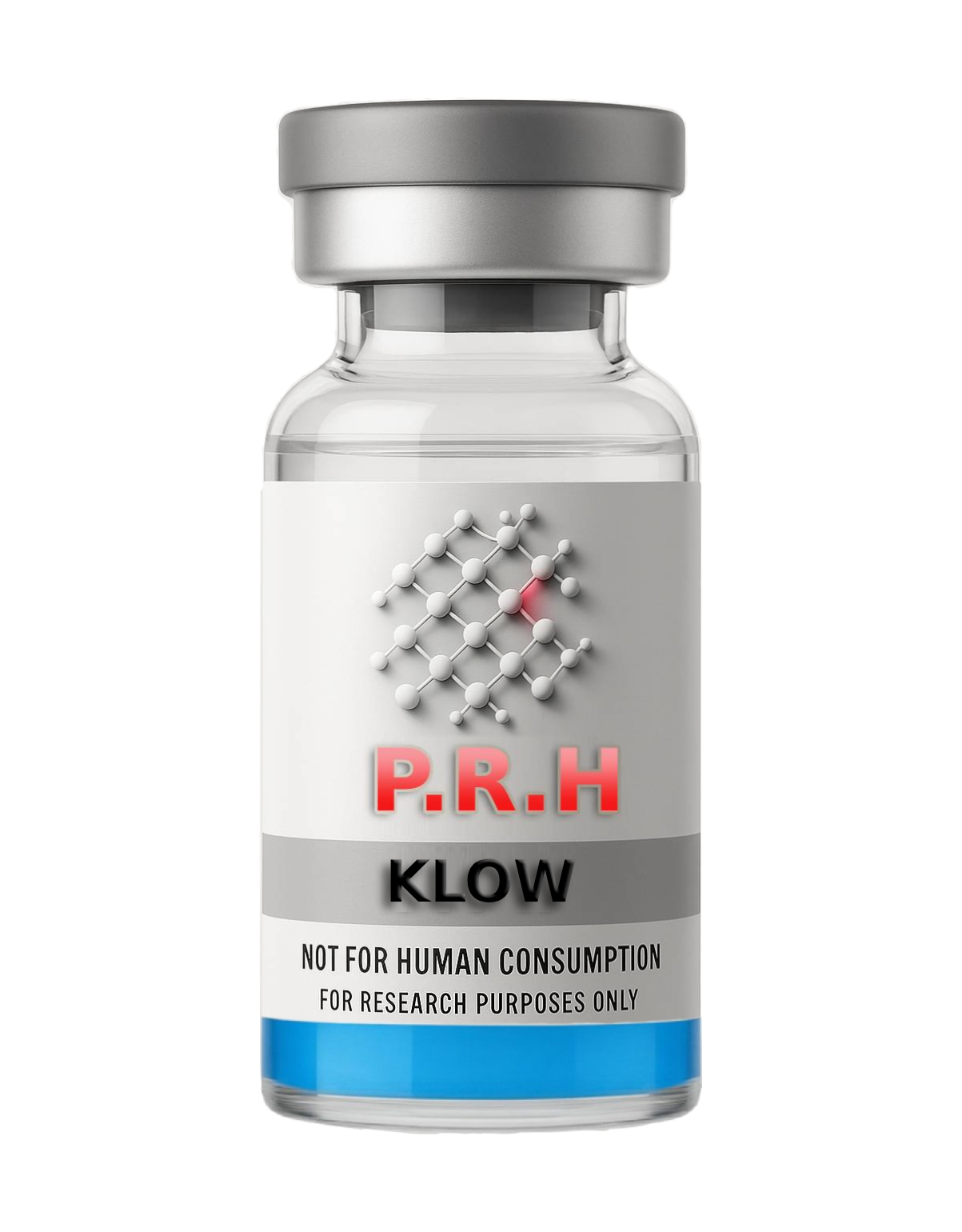
KLOW 80mg peptide blend is a multi-peptide research formulation that combines four widely studied compounds into a single lyophilized blend. Each vial contains GHK-Cu 50mg, BPC-157 10mg, TB-500 10mg, and KPV 10mg, providing researchers with a comprehensive model for investigating multiple biological pathways involved in tissue repair, skin biology, connective tissue physiology, inflammatory signaling, collagen production, and cellular communication.
Unlike single-peptide products, KLOW Blend allows laboratories to evaluate how several complementary peptides may influence different aspects of regenerative biology within the same experimental model. The combination is frequently explored in studies involving skin quality, extracellular matrix remodeling, connective tissue response, recovery physiology, angiogenesis, cellular migration, and inflammatory regulation.
Each component contributes a distinct area of scientific interest. GHK-Cu is extensively investigated for collagen biology, skin regeneration, copper peptide signaling, and extracellular matrix remodeling. BPC-157 is commonly studied for tissue response, vascular signaling, and gastrointestinal biology. TB-500 is investigated for cellular migration, actin regulation, and connective tissue physiology, while KPV is recognized for research involving inflammatory pathways and immune signaling.
Together these four peptides provide researchers with an advanced investigational blend for laboratory studies focused on recovery, skin biology, connective tissue, healthy aging models, and regenerative signaling.
KLOW 80mg Composition at a Glance
KLOW 80mg research peptide blend contains four defined components totaling 80mg per vial. This composition gives laboratories one formulation for comparative research across copper-peptide signaling, tissue-response pathways, cellular migration, extracellular-matrix biology, and inflammatory signaling.
| Component | Amount | Common research focus |
|---|---|---|
| GHK-Cu | 50mg | Copper-peptide signaling, collagen and extracellular-matrix models |
| BPC-157 | 10mg | Tissue-response, vascular-signaling and connective-tissue models |
| TB-500 | 10mg | Actin regulation, cellular migration and tissue-remodeling research |
| KPV | 10mg | Inflammatory-signaling, epithelial and immune-pathway research |
The defined 50/10/10/10 composition is a distinguishing feature of the KLOW 80mg peptide blend and gives researchers a clear basis for comparing multi-peptide formulations by composition and research pathway.
Research Overview
KLOW Blend has become an attractive research formulation because it combines peptides that are individually investigated across several complementary biological systems. Rather than focusing on a single pathway, researchers can examine interactions involving collagen production, connective tissue biology, cellular communication, inflammatory signaling, angiogenesis, extracellular matrix remodeling, and tissue recovery.
Experimental studies involving the individual components have explored models related to skin structure, wound healing physiology, tendon and ligament biology, muscle recovery, gastrointestinal tissues, immune regulation, and healthy aging. Combining these compounds into one investigational blend allows researchers to evaluate how multiple regenerative pathways may function together under controlled laboratory conditions.
The high concentration of GHK-Cu (50mg) makes this blend especially relevant for studies involving collagen synthesis, dermal remodeling, copper peptide biology, and extracellular matrix research. The addition of BPC-157, TB-500, and KPV broadens the scope of investigation by incorporating pathways associated with tissue response, recovery, cellular migration, inflammatory modulation, and connective tissue physiology.
The 80mg presentation provides sufficient material for extended laboratory investigations, comparative peptide studies, and long-term experimental protocols involving regenerative and recovery-related biological systems.
Mechanism of Action & Research Pathways
Each peptide within KLOW Blend contributes to different research pathways, creating a broad platform for investigating regenerative biology.
- GHK-Cu is investigated for collagen synthesis, extracellular matrix remodeling, copper peptide biology, dermal regeneration, and skin physiology.
- BPC-157 is commonly studied for tissue response, angiogenesis, nitric oxide signaling, vascular biology, and connective tissue research.
- TB-500 is investigated for actin regulation, cellular migration, tissue remodeling, and recovery-related biological processes.
- KPV is widely researched for inflammatory signaling, immune modulation, epithelial biology, and cytokine-related pathways.
Because these peptides target different biological mechanisms, KLOW Blend enables researchers to investigate multiple regenerative signaling systems simultaneously. This broad biological profile has made the formulation valuable in experimental models involving skin quality, connective tissue, recovery physiology, inflammation, and healthy aging research.
KLOW Blend 80mg Research Applications
- Skin biology and dermal regeneration research
- Collagen synthesis and extracellular matrix studies
- Copper peptide signaling investigations
- Connective tissue physiology research
- Tendon and ligament biology models
- Muscle recovery and tissue response studies
- Cellular migration and tissue remodeling research
- Inflammatory signaling and immune pathway investigations
- Healthy aging and regenerative biology research
- Comparative multi-peptide pathway studies
Why Are These Four Peptides Combined?
KLOW Blend combines four research peptides that are frequently investigated for different aspects of regenerative biology. Rather than concentrating on one biological pathway, the formulation allows researchers to study several complementary systems within the same experimental model.
GHK-Cu is commonly researched for collagen production, skin quality, extracellular matrix remodeling, and copper peptide signaling. BPC-157 is investigated in studies involving connective tissue, vascular biology, tissue response, and gastrointestinal pathways. TB-500 is widely studied for cellular migration, actin regulation, tissue remodeling, and recovery physiology, while KPV is researched for inflammatory signaling, epithelial biology, and immune-related pathways.
Together these peptides provide laboratories with a comprehensive research platform for studying skin biology, connective tissue, recovery physiology, inflammation, collagen remodeling, and cellular communication.
Why Choose Peptide Research Hub?
- Research-focused peptide products
- Clearly labeled compounds and transparent specifications
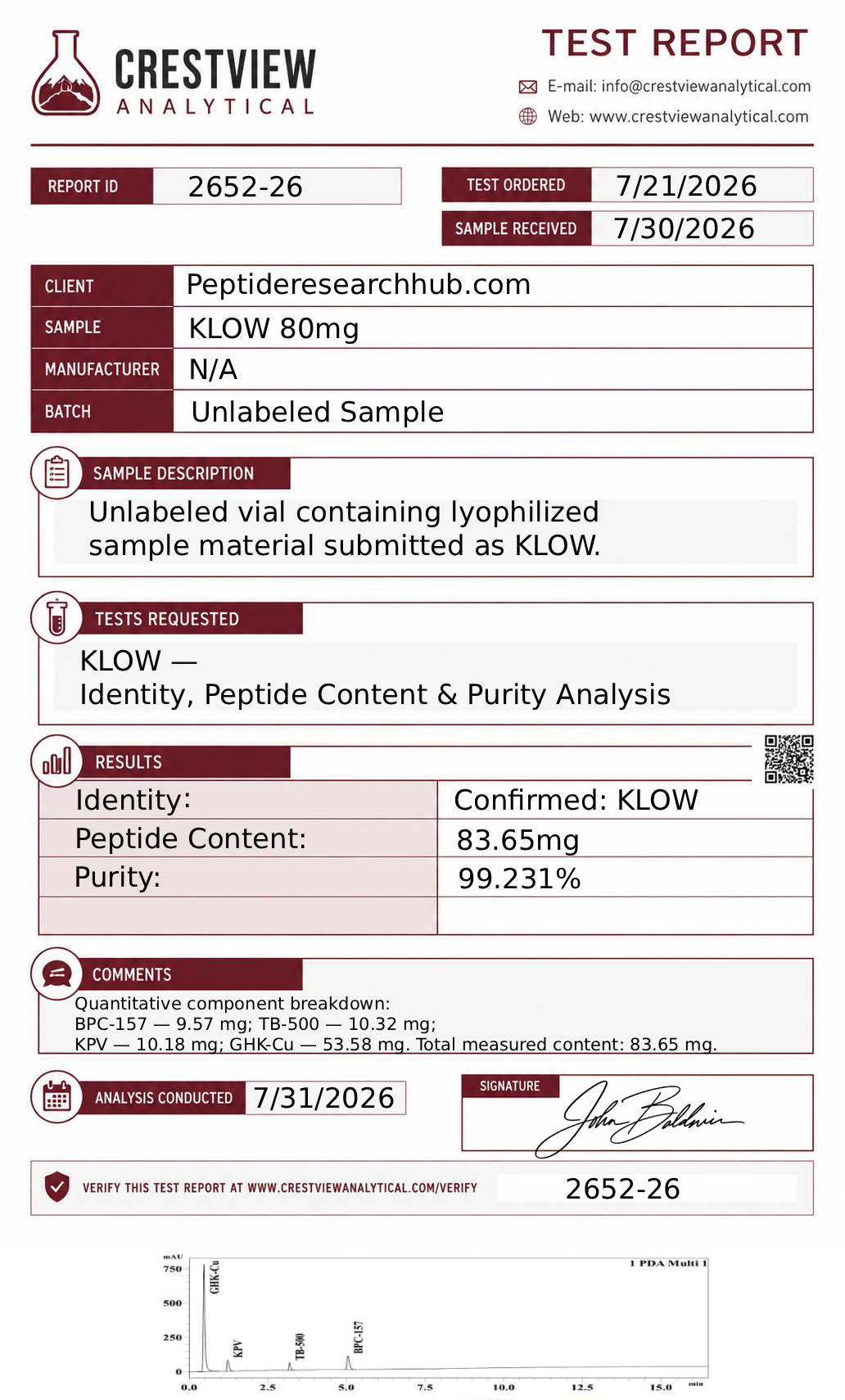
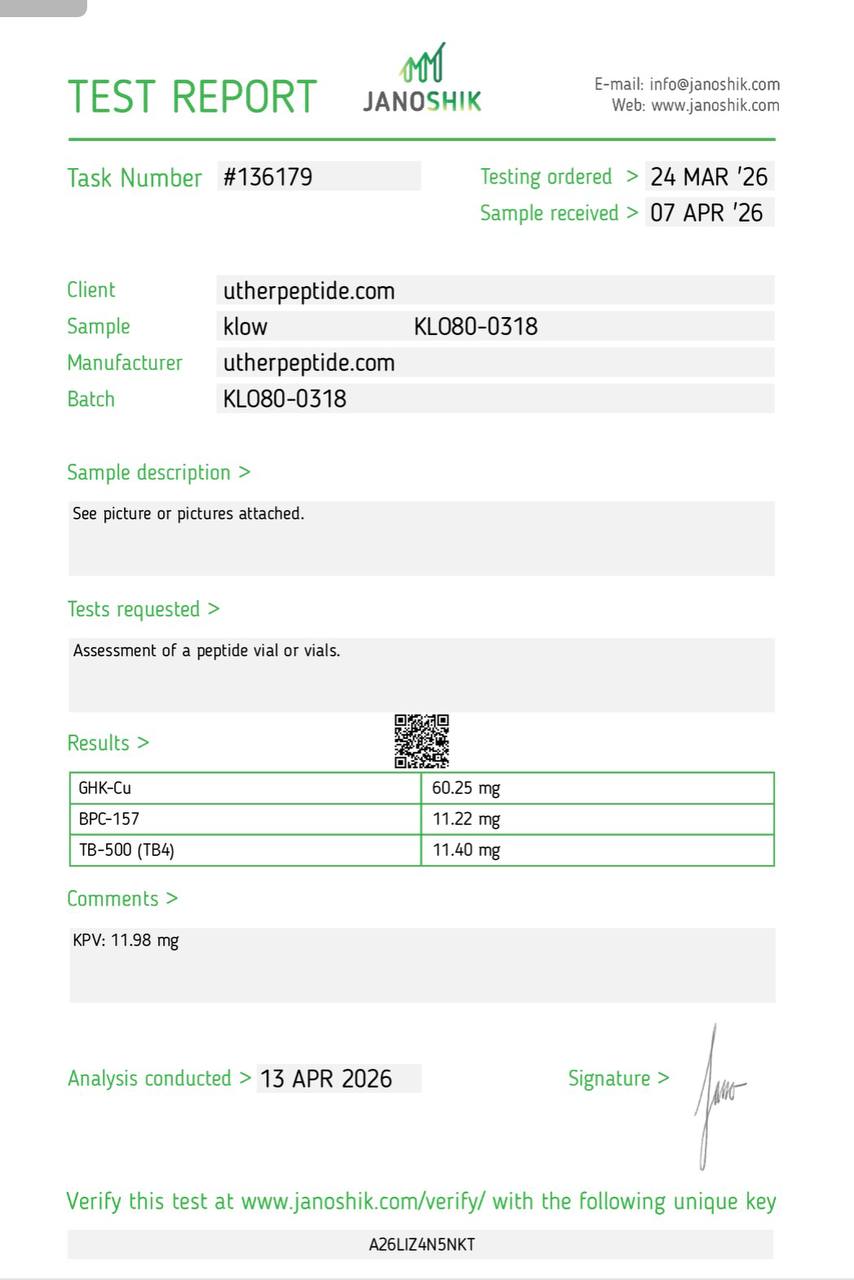
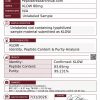
- Third-party testing available for applicable products
- Fast order processing and dependable fulfillment
- Responsive customer support
- Detailed product information designed for laboratory researchers
Researchers can review available analytical reports on our
Third-Party Testing
page.
Product Specifications
- Product: KLOW Blend 80mg
- GHK-Cu: 50mg
- BPC-157: 10mg
- TB-500: 10mg
- KPV: 10mg
- Total Peptide Content: 80mg
- Form: Lyophilized powder
- Appearance: White to light blue lyophilized powder
- Category: Multi-peptide research blend
- Research Focus: Skin biology, collagen production, connective tissue, inflammation, recovery, and regenerative signaling
- Use: Laboratory research only
Storage & Handling
Store KLOW Blend 80mg according to standard laboratory procedures for lyophilized research peptides. Protect the material from excessive heat, moisture, and direct light. Proper storage helps preserve peptide stability and consistency for controlled laboratory investigations.
Frequently Asked Questions
What is KLOW 80mg peptide blend?
KLOW 80mg peptide blend is a research formulation containing GHK-Cu 50mg, BPC-157 10mg, TB-500 10mg, and KPV 10mg for laboratory investigations involving regenerative biology and connective tissue research.
Why is GHK-Cu the largest component?
The formulation emphasizes GHK-Cu because of its extensive research involving collagen production, copper peptide biology, extracellular matrix remodeling, and skin physiology.
What research areas commonly use KLOW Blend?
Researchers commonly investigate KLOW Blend in laboratory models involving skin biology, connective tissue, collagen production, inflammatory signaling, tissue remodeling, recovery physiology, and regenerative pathways.
Is this supplied as a lyophilized powder?
Yes. KLOW Blend 80mg is supplied as a lyophilized research peptide blend.
Is KLOW Blend intended for human use?
No. KLOW Blend 80mg is intended strictly for laboratory research and analytical applications. It is not intended for human or veterinary use.
Related Research Peptides
Research Use Only: KLOW Blend 80mg is intended strictly for laboratory research and analytical applications. Not for human or veterinary use.
Be the first to review “KLOW 80mg Peptide”
Related products
Peptides
✓ Save 40% — Discount Automatically Applied. No Coupon Needed.

Peptides
✓ Save 40% — Discount Automatically Applied. No Coupon Needed.

Peptides
✓ Save 40% — Discount Automatically Applied. No Coupon Needed.

Deals of the Week
✓ Save 40% — Discount Automatically Applied. No Coupon Needed.

Peptides
✓ Save 40% — Discount Automatically Applied. No Coupon Needed.
Deals of the Week
✓ Save 40% — Discount Automatically Applied. No Coupon Needed.

Peptides
✓ Save 40% — Discount Automatically Applied. No Coupon Needed.
Reviews
There are no reviews yet.