




BPC-157 10mg Peptide

$40.99 $24.59
✓ Save 40% — Discount Automatically Applied. No Coupon Needed.
BPC-157 10mg Research Peptide
High-quality lyophilized BPC-157 10mg peptide for laboratory research involving regenerative signaling, angiogenesis, cellular pathways, and tissue response.
Research Use Only. Not for human or veterinary use.
BPC-157 10mg Peptide | Research Peptide for Regenerative Pathway Studies | Peptide Research Hub
BPC-157 10mg Peptide
Lyophilized BPC-157 Research Peptide for Regenerative, Cellular Signaling & Tissue Research
What is BPC-157 10mg?
BPC-157 10mg is a synthetic pentadecapeptide consisting of 15 amino acids. BPC-157 has become a widely investigated research peptide because of its involvement in experimental models examining cellular signaling, angiogenesis, tissue response, gastrointestinal pathways, and regenerative biological processes.
Laboratory research involving BPC-157 has examined its interaction with several biological pathways associated with vascular signaling, nitric oxide activity, cellular migration, inflammatory signaling, and tissue remodeling.
The BPC-157 10mg peptide presentation provides researchers with a lyophilized format suitable for controlled laboratory investigations and comparative peptide studies.
BPC-157 is also frequently investigated alongside other regenerative research compounds such as TB-500, allowing researchers to compare different peptide signaling pathways within experimental models.
BPC-157 Research Overview
BPC-157 research spans several areas of experimental biology. Published preclinical investigations have explored the peptide in models involving gastrointestinal tissue, vascular response, connective tissue, inflammatory signaling, and cellular repair mechanisms.
One area of interest involves angiogenesis and vascular signaling. Researchers have investigated how BPC-157 may interact with pathways associated with endothelial activity, blood-vessel formation, and tissue response.
Another research area involves nitric oxide signaling. Nitric oxide participates in vascular regulation and numerous cellular processes, making this pathway relevant to experimental investigations involving BPC-157.
BPC-157 has additionally been examined in laboratory models involving tendons, ligaments, muscle tissue, gastrointestinal tissue, and other biological systems associated with regenerative signaling.
These areas of investigation have made BPC-157 a recognizable compound in experimental peptide and regenerative pathway research.
BPC-157 Mechanism & Signaling Research
The biological mechanisms associated with BPC-157 continue to be investigated. Experimental research has examined several signaling systems rather than identifying a single isolated pathway responsible for its observed activity.
Research areas include interactions involving nitric oxide pathways, vascular signaling, growth-factor-related processes, cellular migration, inflammatory signaling, and extracellular tissue remodeling.
Because these pathways participate in many biological processes, BPC-157 provides researchers with an interesting model for studying the relationship between peptide signaling and cellular response.
BPC-157 10mg Research Applications
- Regenerative pathway research
- Cellular signaling investigations
- Angiogenesis and vascular signaling models
- Nitric oxide pathway research
- Connective tissue research models
- Tendon and ligament research
- Gastrointestinal pathway investigations
- Inflammatory signaling research
- Cell migration and tissue remodeling studies
- Comparative regenerative peptide research
BPC-157 vs. TB-500 in Research
BPC-157 and TB-500 are frequently discussed together in regenerative peptide research, although they represent different compounds and are investigated through different biological mechanisms.
BPC-157 research commonly examines gastrointestinal pathways, vascular signaling, nitric oxide activity, connective tissue models, and cellular response.
TB-500 research is commonly associated with actin regulation, cellular migration, angiogenesis, and tissue remodeling pathways.
Researchers interested in both compounds can explore our
TB-500 10mg Peptide
or the
BPC-157 + TB-500 research blend.
Why Choose Peptide Research Hub?
- Research-focused peptide products
- Quality-focused sourcing and handling standards
- Clear compound and vial labeling
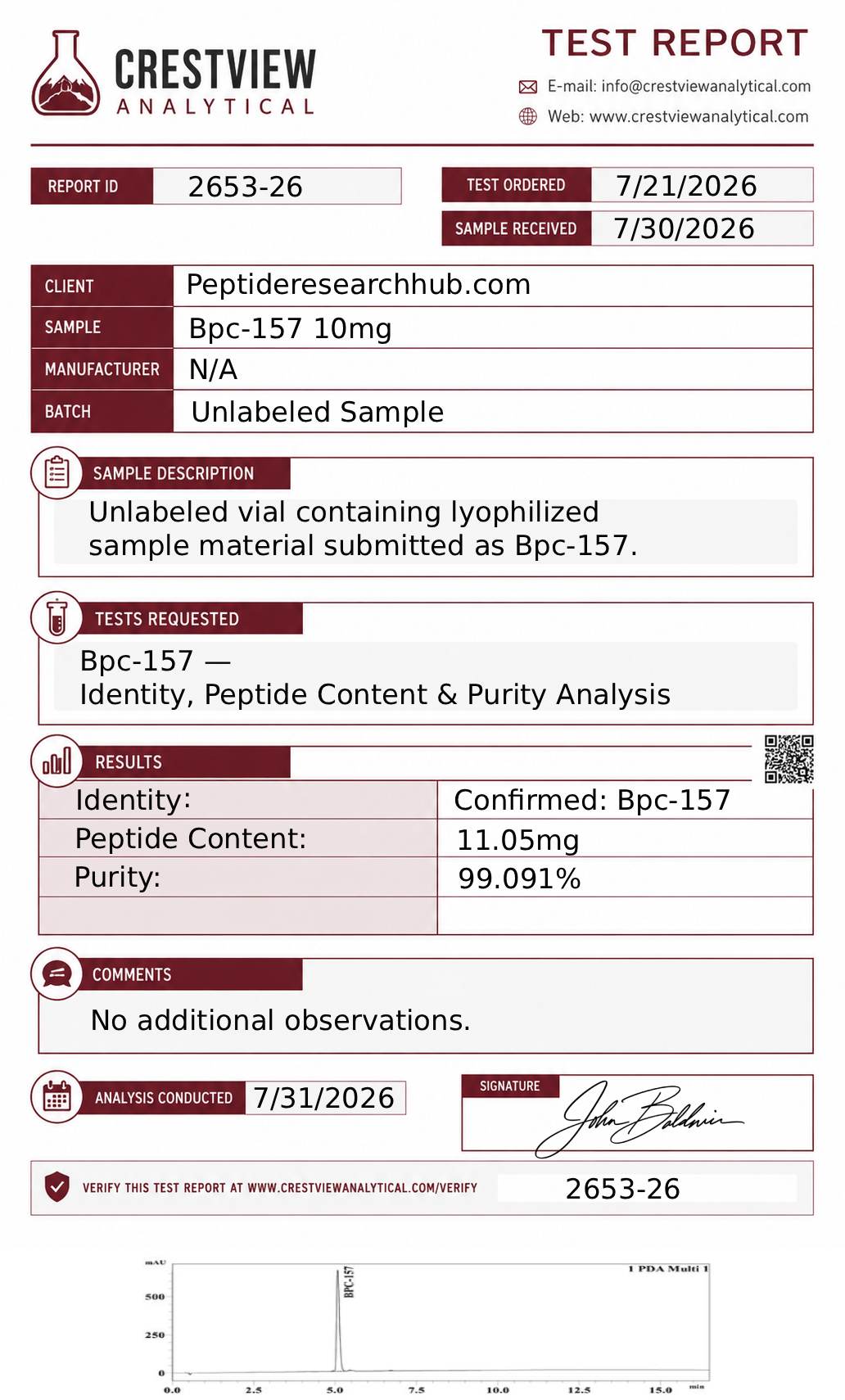
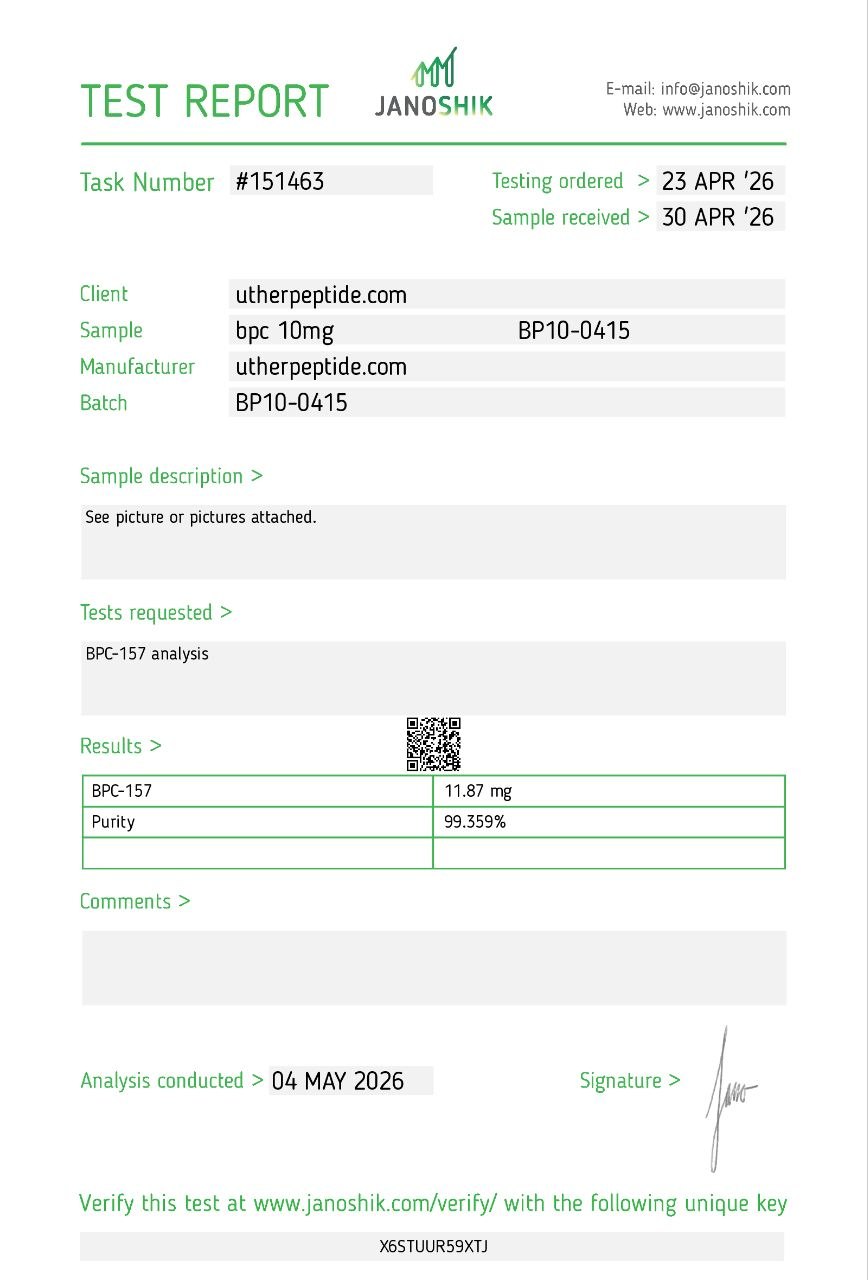
- Third-party testing information available for applicable products
- Fast order processing and reliable fulfillment
- Responsive customer support
Researchers can review available analytical information on our
Third-Party Testing page.
BPC-157 10mg Product Specifications
- Product: BPC-157 10mg Peptide
- Compound: BPC-157
- Peptide Length: 15 amino acids
- Quantity: 10mg per vial
- Form: Lyophilized powder
- Category: Research peptide
- Research Focus: Regenerative pathways, cellular signaling, vascular signaling and tissue research
- Use: Laboratory research only
Storage & Handling
BPC-157 10mg should be stored according to appropriate laboratory procedures for lyophilized research peptides. Protect the material from excessive heat, moisture, and direct light.
Careful laboratory storage and handling help preserve compound integrity for controlled research applications.
BPC-157 10mg Frequently Asked Questions
What is BPC-157 10mg?
BPC-157 10mg is a 15-amino-acid synthetic research peptide supplied in a 10mg lyophilized format for laboratory investigation.
What is BPC-157 studied for?
Experimental BPC-157 research has examined regenerative signaling, vascular pathways, nitric oxide signaling, gastrointestinal models, connective tissue response, cellular migration, and inflammatory pathways.
How many amino acids are in BPC-157?
BPC-157 is a pentadecapeptide composed of 15 amino acids.
Are BPC-157 and TB-500 the same peptide?
No. BPC-157 and TB-500 are different research compounds and are investigated for different biological pathways, although both appear frequently in regenerative peptide research.
Is this BPC-157 supplied as a lyophilized powder?
Yes. This BPC-157 10mg research product is supplied in lyophilized form.
Is BPC-157 10mg intended for human use?
No. This product is intended strictly for laboratory research and analytical applications. It is not intended for human or veterinary use.
Related BPC-157 & Regenerative Research Peptides
Researchers investigating BPC-157 may also be interested in different vial quantities and related regenerative research peptides.
Be the first to review “BPC-157 10mg Peptide”
Related products
Peptides
✓ Save 40% — Discount Automatically Applied. No Coupon Needed.
Deals of the Week
✓ Save 40% — Discount Automatically Applied. No Coupon Needed.

Peptides
✓ Save 40% — Discount Automatically Applied. No Coupon Needed.

Peptides
✓ Save 40% — Discount Automatically Applied. No Coupon Needed.

Peptides
✓ Save 40% — Discount Automatically Applied. No Coupon Needed.
Peptides
✓ Save 40% — Discount Automatically Applied. No Coupon Needed.

Deals of the Week
✓ Save 40% — Discount Automatically Applied. No Coupon Needed.
Peptides
✓ Save 40% — Discount Automatically Applied. No Coupon Needed.
Reviews
There are no reviews yet.